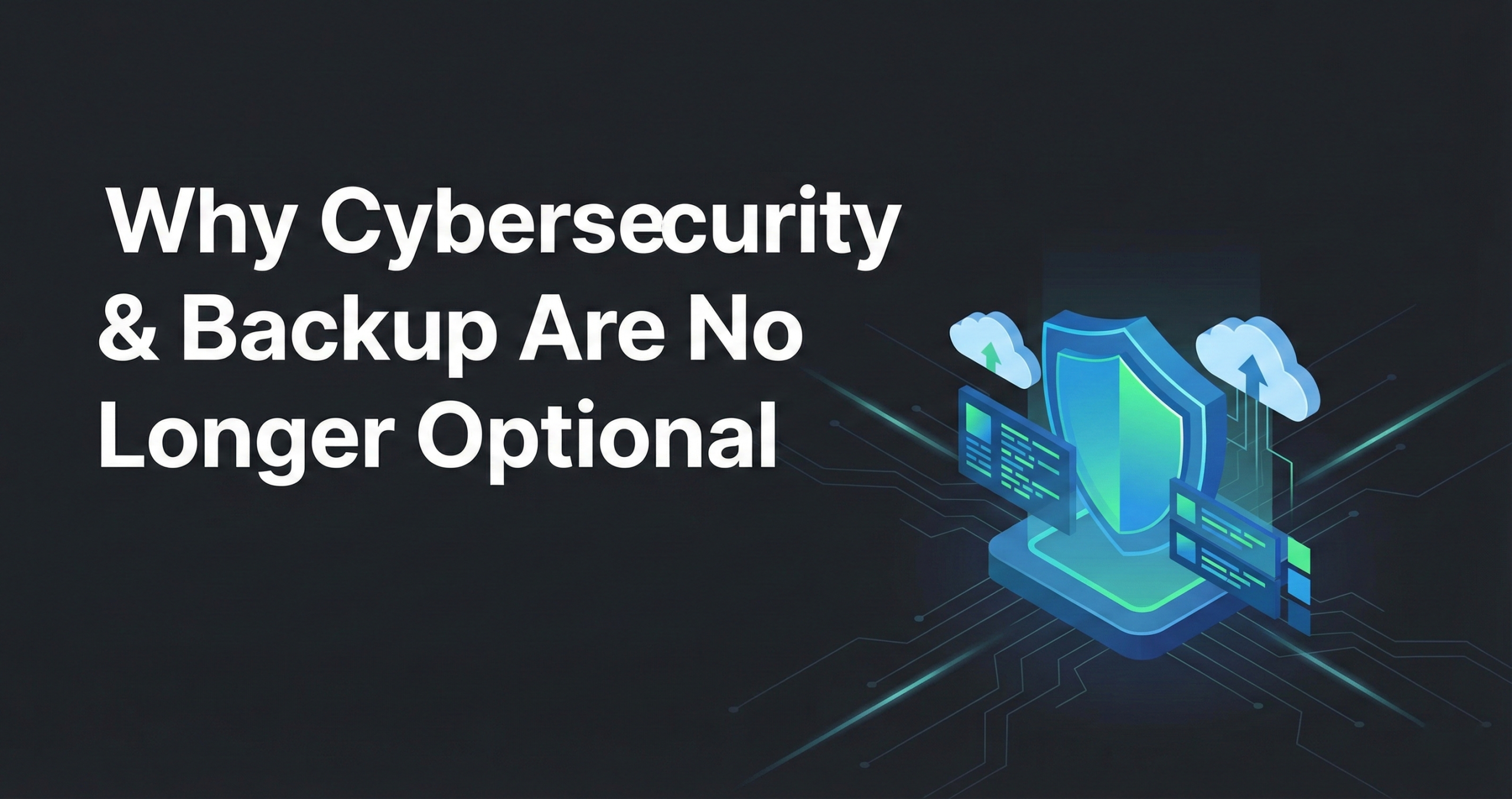
Why Cybersecurity & Backup Are No Longer Optional
The idea of “optional security” quietly disappeared**
A decade ago, a small company could get away with a basic antivirus, a cheap firewall, a NAS device in the corner of the office and a bit of hope.
Today, the concept of “optional security” simply doesn’t exist.
Not because the industry invented new buzzwords.
Not because vendors want to sell more tools.
But for a much simpler reason:
Data is the business now
And protecting it costs far less than losing it.
Yet most teams have no clear understanding of when their security posture becomes critical, what the real attack vectors look like, or how easily their data can be lost without a proper backup strategy.
This isn’t a guide for “small businesses should…” or “in 2025 you must…”.
This is a practical breakdown of what’s actually happening in real environments.
1. Attacks stopped being “targeted”
There was a time when attackers picked industries or organisations.
Today, most attacks are fully automated.
Bots:
-
Sweep IP ranges
-
Try default credentials
-
Scan for known vulnerabilities
-
Probe common ports
-
Attempt credential stuffing
-
Look for outdated plugins, devices and services
And they do this 24/7 across random address blocks.
The assumption “we’re too small to be a target” has been mathematically false for years now.
You’re not targeted because you’re valuable.
You’re targeted because you’re connected.
2. Backup is no longer about hardware failure
For years, backup existed for one scenario:
“If the disk dies, we restore.”
Modern backup exists for completely different reasons:
-
Ransomware encryption
-
Accidental deletion
-
Sync corruption
-
Malicious deletion from inside
-
Cloud platform glitches
-
Zero-day attacks requiring a clean rollback
-
Supply chain compromises
-
A misconfigured script wiping part of the environment
In 2024 and beyond, logical failure is far more common than hardware failure.
Backup today is fundamentally about:
-
Versioning
-
Snapshot integrity
-
Immutable storage
-
Air-gapped options
-
Rapid restore
-
Verifiable recovery points
If your backup strategy doesn’t align with these, it isn’t modern backup.
3. The weakest point is identity — not the firewall
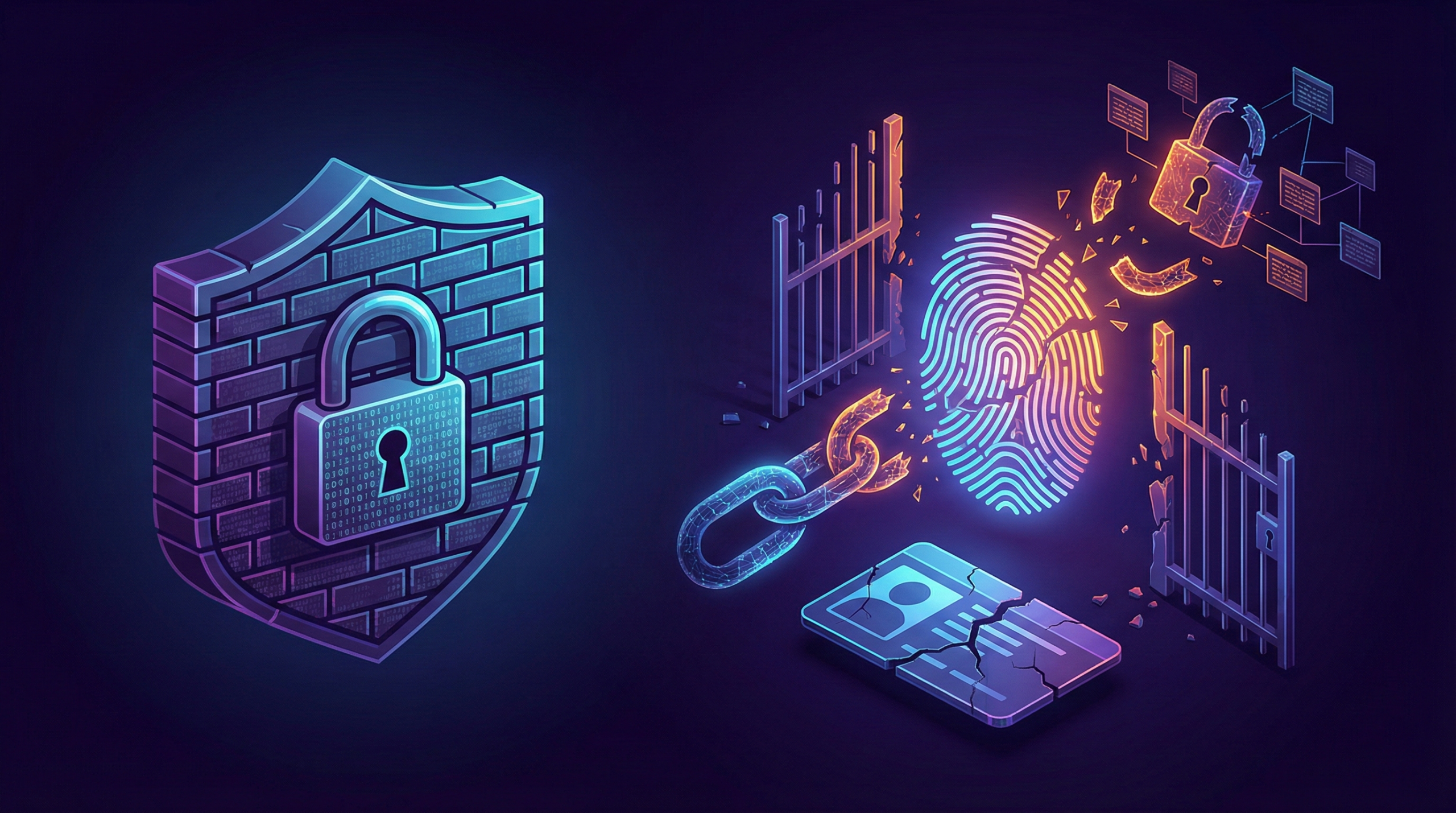
Security tooling spent years focusing on “perimeter defense”.
But the perimeter isn’t where things break anymore.
The real weakness is identity.
Typical examples:
-
Weak or reused passwords
-
No MFA
-
Compromised personal accounts linked to business accounts
-
Excessive admin privileges
-
Legacy mail protocols enabled (IMAP, POP)
-
Unmonitored third-party app permissions
-
Token/session theft
-
Social engineering leading to password resets
A modern attacker often doesn’t need to bypass your firewall.
They just need one employee with a weak identity posture.
Identity hardening is now the foundation of security — not an optional layer.
4. No backup strategy means a single point of failure
Without a proper backup design, the entire business relies on a single state of data.
One mistake can take everything down:
-
A sync issue deletes folders permanently
-
A ransomware strain encrypts everything
-
A junior staff member wipes shared drives
-
A cloud outage corrupts part of the storage
-
A misconfigured automation overwrites data
-
An insider threat deletes records
These events aren’t hypothetical.
They happen every day across organisations of all sizes.
Backup is not insurance —
it’s the only recovery mechanism you control.
5. Security today is a workflow, not a product
Most people still think of “cybersecurity” as buying a tool.
But modern security is not a product.
It’s a workflow:
-
Continuous patching
-
Least-privilege access
-
Conditional access rules
-
Endpoint isolation
-
Log analysis
-
Alert hygiene
-
Incident response practice
-
Backup restore tests (most ignored step)
If you take backups but don’t test restores, you don’t have a backup.
If you deploy MFA but never review access logs, it’s not real protection.
If you patch servers but not endpoints, you’ve created holes.
Security products don’t replace security processes.
Workflows are the real defense.
6. What this actually means — without any sales pitch
You don’t need to be a large company to need proper security or backup.
A single laptop, a shared mailbox or a cloud storage folder is enough to create real risk.
This isn’t about regulations, trends or annual reports.
It’s simply about how modern systems behave.
Security protects your data.
Backup gives it a second life.
One without the other is incomplete.
The point isn’t to scare anyone —
it’s to clarify something that often gets drowned out by buzzwords:
Cybersecurity and backup are no longer “extras”.
They’re baseline infrastructure — like power, connectivity or storage.
Conclusion
Cybersecurity prevents disaster.
Backup reverses it.
Both have become foundational parts of operating any digital environment — regardless of size, industry or complexity.
They’re not optional.
They’re essential.